Israel is home to 1,150 artificial intelligence companies accounting for 17% of the total number of 6,673 active Israeli tech companies, while funding for Israeli AI-based startups in Israel hit $2.25 billion last year.
These companies are expanding at lightning pace using AI capabilities to entirely rethink traditional industries – from drug discovery to robotics and education. This type of thinking is encapsulated by Tel-Aviv based CHEQ, whose mission plan is no less than using AI to “save” the internet.
The company has become a leader in ad verification, fighting ad fraud, brand safety and a lack of viewability, which are collectively decimating the $330billion budget spent each year on digital advertising.
However, the company has set its sights on using advances in AI to block wider harm on the internet - from fake news to dodgy influencer marketing and cyberbullying. CHEQ was recently identified (as was recently announced by Israeli media and investors) as the pick of the next 10 unicorns to emerge from the Israeli tech scene – showing the faith of investors in AI to disrupt industries.
The CHEQ story also shows the power of Israeli startups to gain a foothold in important markets, through a mix of tech talent, army intelligence, and an ability to entirely re-imagine industries.
CHEQ was founded in September 2014 by Guy Tytunovich. Like many Israeli founders, Tytunovich is a former Israeli military intelligence officer. Tytunovich graduated from Israel’s elite and clandestine 8200 unit. Previous founders from the unit who have founded Israeli-based tech powerhouses include Avishai Abrahami, founder of Wix, Yair Cohen, founder of defense electronics company Elbit Systems, and Nadav Zafrir, founder of cybersecurity leader Team8.
In creating CHEQ, Tytunovich assembled a team that has brought military grade cybersecurity and AI to rethink the approach by businesses in fighting the enemies of the internet. CHEQ is using AI to create what he calls the “Trusted Web” — rebuilding business and consumer confidence in everything from digital advertising to news and safety online.
Tytunovich says: “The digital ecosystem today is compromised by existential breaches of trust – fraud: eroding our trust in monetary transactions, fake news: eroding our trust in content, cyberbullying: eroding our trust in social-media and apps, and election-meddling: eroding our trust in the democratic process. Our vision at CHEQ is to create the user and content analysis capabilities to mitigate these issues and restore trust in our digital ecosystem.”
CHEQ is using the advances in technology to provide a new way to analyze and stop global internet dangers. Since being founded, CHEQ has quickly expanded beyond Israel to New York and Tokyo as the demand for better ROI on campaigns has required new technology to stop bad actors online. CHEQ, like many military-born startups, benefits from a large pool of engineers in the country and experts trained for elite tasks, fine-tuning computer algorithms to digest millions of surveillance photos and sift out actionable intelligence.
This type of technology is helping to refresh the sector of ad verification, providing clearer ROI for advertisers. Unlike its competitors, CHEQ’s origins in military-grade cybersecurity (80% of its staff are engineers) provides (quite literally) new vision when it comes to the complex challenges of saving digital advertising and ending internet harms. Tytunovich adds: “First-generation tech has struggled to provide accurate, preemptive solutions for the challenges of ad-verification. The power of AI is the ability to provide unprecedented accuracy, automation, customization and proactive protection at scale.”
AI and a new approach to fighting online enemies
Take the problem of brand safety. This is a relatively recent problem that has become a huge burden for online advertisers. It essentially refers to the strategy put into place to help ensure that online advertisements or associations do not appear on or in websites, videos or articles that may conflict with the brand’s image, mission or goals.
CHEQ created the Neural-NLP engine, capable of analyzing an entire body of text in absolute real-time while applying sentiment-analysis, conversational-learning, lexical-semantics, and hyponymy modules, operating simultaneously to accurately classify the content.
The company is developing content-analysis tools for video, including motion-analysis, audio-recognition, and advanced-sequencing, classifying video content in real-time. This is used today by leading advertisers—CHEQ has signed up clients including Dentsu, Outbrain, and Subaru—to ensure their ads never appear alongside harmful content.
The CHEQ AI has been developed for five years and trained on millions of pieces of content to understand the exact meaning of any news source. In milliseconds, the AI can confirm with human-levels of accuracy what a piece of content is — and is not — whether it is a post on body modification, an article on personal finance or an essay about fine art.
Taking the fight to ad fraud
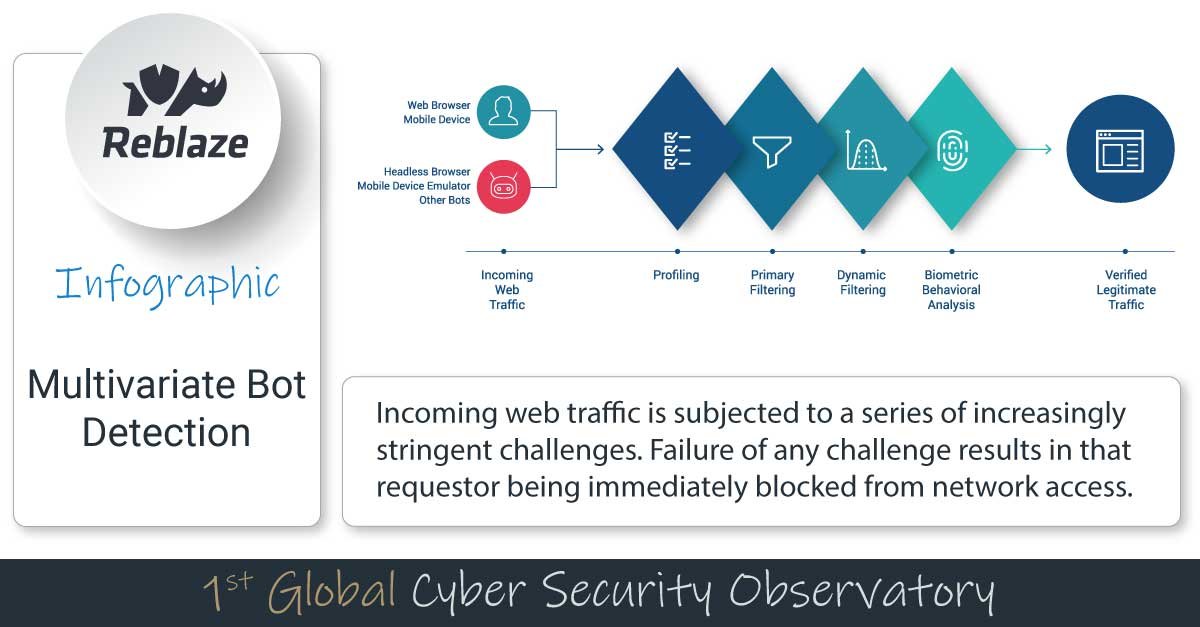
The AI is also being utilized today by the world’s leading advertisers to ensure they never serve ads to bots either - ad fraud costs around $95 billion a year by defrauding advertisers. Using cybersecurity training for the first time in the world of advertising, CHEQ engineers built an engine which examines over 700 different user parameters in real-time, including Device/Browser/OS Fingerprinting and sophisticated honeypots (proprietary bot-traps). Moreover, CHEQ developed AI to detect abnormal and fraudulent behavior, comparing millions of events in real time. The AI analyzes dozens of different fraud reasons in milliseconds, from location obfuscation to spoofing of sites. The use of AI also allows the CHEQ platform to constantly predict new fraud, while CHEQ is also using proprietary ‘mouse movement’ data to train its AI in millions of data points, to understand and distinguish between human interaction online compared to bots.
The use of AI is allowing the true relevance of online content to be understood and interpreted faster and more accurately than humans can. In the words of Forrester report on AI in marketing this is the wave of the future: “AI-driven marketing’s promise is not to add yet one more technology to the heap, but to simplify the process of stitching together disparate data and sources and reducing time and complexity in turning them into actionable insights.”
For Israeli companies, their training in AI and investment in its future is paying off. CHEQ grew rapidly in 2018, securing a total of $5million (Series A) funding from leading Silicon Valley investor VC Battery Ventures. The company now employs more than 50 staff and is picking up dozens of new clients each week.
Such companies ensure the spotlight will remain on Israeli advances in AI long into the future. In the past year, Intel, Facebook, Microsoft, and IBM are just some of the companies that have unveiled AI technologies cooked up from their teams in Israel.
It has become clear that most industries will be upended by advances in AI. Consultancy, McKinsey, for instance estimates AI techniques have the potential to create between $3.5T and $5.8T in value annually.
What has also become clear is that, punching above the country’s weight, Israeli-based companies will be at the center of this revolution.