New Data Protection Challenges and Cybercrime Combat
Author: Luc d’Urso, CEO of the Atempo-Wooxo Group
Luc d’Urso, CEO of the Atempo-Wooxo Group, named “Most Influential CEO of the Year 2019 – Cyber security” by the Corporate Vision Magazine, gives us his vision of large data security issues and the ongoing threats and increasingly sophisticated nature of cyberattacks.
Luc, why is a software vendor of data management honored in the domain of Cybersecurity?
Data, today, is at the heart of all value creation. The health of a firm is 100% conditioned by data availability, integrity, authenticity and confidentiality. To protect against incidents that can lead to data loss and/or production down time, there are many solutions which either prevent these incidents occurring or provide a solution if they do occur.
Backup and recovery solutions belong to the second category. They existed in the past to recover data after hardware failure or human error, theft or natural disaster. The growing number or cyberattacks underline the importance of maintaining a genuine backup and disaster recovery solution which is often the final rampart if preventative measures are breached.
Talk me through the cybersecurity market in your sector currently. What major challenges and outside influences is it facing?
In terms of data protection and confidentiality, the European Union has the most stringent regulatory framework in the world, and it continues to strengthen. This is due to its history. The French software industry and data hosting companies are structured in compliance with this regulation (CNIL, GDPR …). They set a gold standard in terms of security. All our developers are fully aware of the credo “security and confidentiality by design”. Atempo is also an active member of HEXATRUST, the association that federates the French cybersecurity sector of which I assume the Vice Presidency.
Atempo operates at the forefront of the fight against cyber threats and criminality. Faced with ever-growing and sophisticated cybercriminal attacks, the main challenges we must tackle are linked to IOT, Mobility and the Cloud. The former because we must deal with a huge number of low-cost objects producing data which need to be instantly processed which raises challenges in terms of total availability and risks of data compromise. Mobility poses serious security issues for identification and communication. As for the Cloud, the chain of responsibility in case of data loss or data leakage is a crucial issue.
We understand that backup is a key element in the cyber arsenal. Why then is it not always fully understood by certain enterprises?
Today, we are witnessing vertiginous data growth rates for data produced and preserved by each organization. Unstructured data volumes are rising 10 times faster than structured data. IDC estimate that between 2018 and 2025, we will go from 33 zettabytes to 175 zettabytes, a 60% year on year increase.
We should also factor in new working environments and constraints: mobility, site-to-site collaboration and the need to share and access data 365/24/7.
Data must be available outside of the enterprise in the cloud and be moved between storages, sites and different technologies. Protecting data throughout its life cycle and various transfers can be a complex affair. Traditional solutions are reaching the limit of the requirements of a modern IT infrastructure.
What are today’s data protection challenges?
For me there are four:
- Protect all data
Enterprises are less and less able to protect all their data with a single backup. Too many modified or created files to manage daily. We sometimes have to define which files to protect and which to exclude. In the event of an incident, the maximum admissible data loss often exceeds company guidelines. It’s the same story for Business Continuity and Disaster Recovery plans: the objectives are rarely attained.
- Simplify data management
To handle various data management requirements, organizations often stack four or more solutions on top of each other. This is both costly and inefficient. The tendency is to oversimplify and rely on automation and repetitive and time-consuming tasks to ensure everything is in order. Storage vendor-agnostic solutions which embed Artificial Intelligence are, for me, the best way forward.
- Separate the volume of data to protect from the actual cost of storage
Confronted with exploding data volumes, companies are having to reduce data backup retention periods and the number of protected versions in order to minimize storage costs. The issue with this is that they expose themselves to losing critical data.
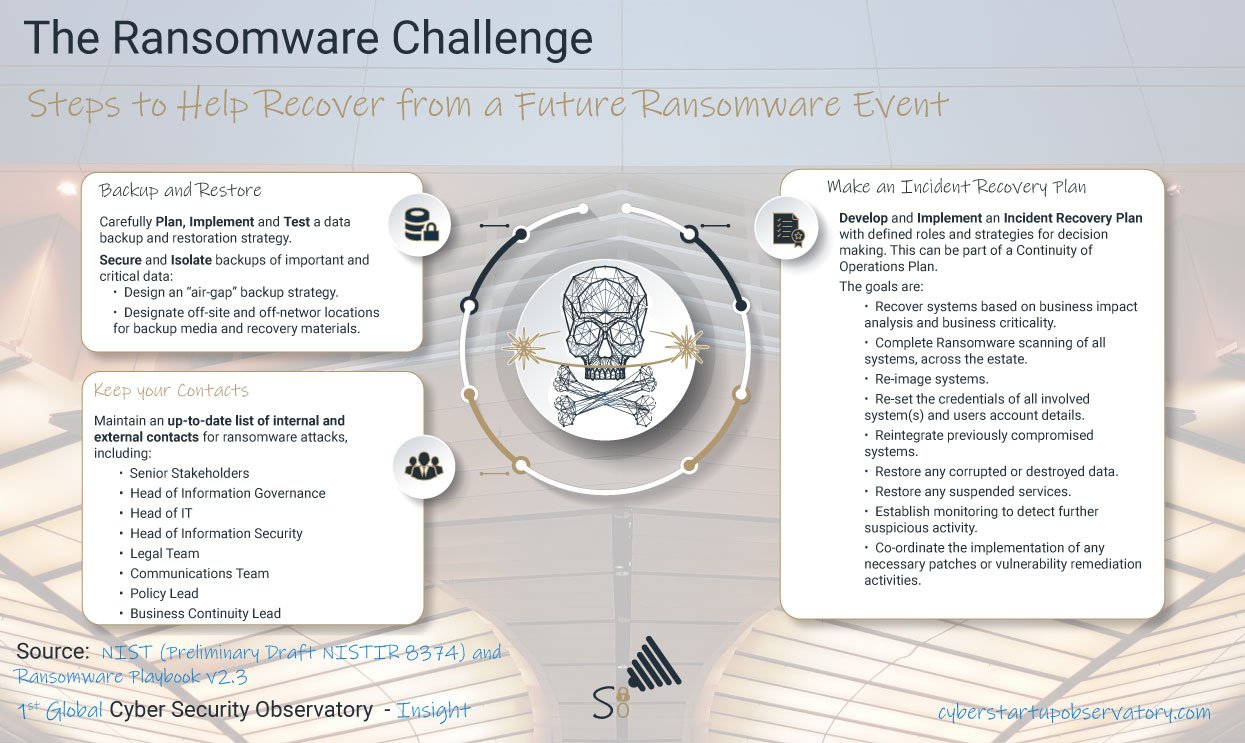
If there is a dormant virus in your data set and backups are recycled before the virus is unleashed, the risk is that the backup will also be compromised. It’s always a good idea to build in an “air gap” to your data storage targets. Use lower cost offline methods such as LTO tape which is also cheaper than nearline SAS or flash which is more suited to primary data storages.
- Limit the reliance on single vendors and service providers
To really take back control of your data, organizations should be able to change their vendor or service provider if full satisfaction is not achieved or if there is a price issue. It should be possible to move data between two storages on different sites or in the cloud and ensure continued service and security levels.


Data Protection Challenges - Conclusion
We firmly believe that in a digital world it is essential to prevent our political enemies and our economic competitors from obtaining and analyzing data produced by our workforces and our fellow citizens, our organizations and our connected objects. The combat we are fighting against cybercrime will require us to accelerate our research efforts and use AI. And agile players such as Atempo can topple the established order and aging and unsafe practices.
To achieve our goals, we have opened an Artificial Intelligence Research Center, NextIno, in France to work on our next generation of data protection and data movement solutions.
Follow Us
New Data Protection Challenges and Cybercrime Combat