Underlying the European cloud challenge is the security of the data of 700 million citizens!
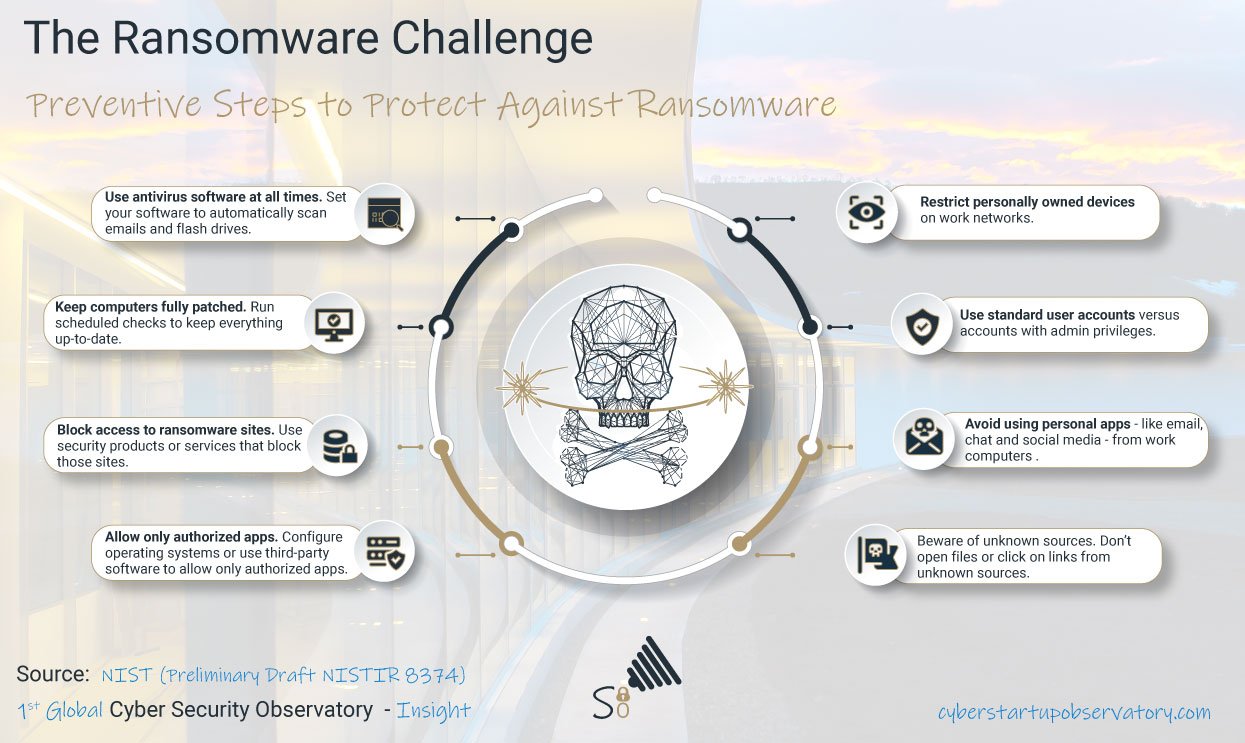
 Underlying the European cloud challenge - In 2021, companies worldwide suffered a ransomware type attack every 11 seconds, costing an estimated 17 billion euros (according to a Cybersecurity Ventures report). This 21st century scourge involves ransomware that is increasingly sophisticated and diverse. Just as cloud backups were considered a last bastion against the cyberattacks that paralyse corporate information systems, hackers are now able to compromise them too.
The increasing strength of cyberattacks shows that data remains vulnerable even in the cloud, and that to protect it, companies need to increase controls and security. This is impossible without a 100% European sovereign and trusted solution.
The major US cloud providers have almost 70% of global cloud market share. The challenge for Europe is to develop its own sovereign solutions that guarantee that the data is stored in Europe, operated by European players and provide citizens security, compliance and governance.
The glaring incompatibility between US laws and European values
By choosing to give personal data to US service providers, companies become subject to US law. The 2018 Cloud Act authorises the US government to access emails and digital data stored on US servers, regardless of their location. The Act removes guarantees of confidentiality and the most sensitive data can be collected unknown to citizens. A 2018 report stated that over the past twenty years, the United States have taken many European companies that were in competition with US firms to court, blatantly supporting their own organisations to keep hold of their global influence.
Moreover, the invalidation in 2020 by the European Court of Justice of the “Privacy Shield” between European companies and US service providers highlighted the incompatibility of US monitoring tools with the European GDPR principles.
The revelations on how Facebook allowed Cambridge Analytica to access 87 million global users’ data during the 2016 US presidential election campaign (including 2.7 million in the European Union) are the perfect illustration of the high stakes linked to personal data protection and the dramatic consequences for companies handling data with no regard for either protection or privacy. At a time when companies that fail to be GDPR compliant are severely sanctioned by Europe, US legislation is not primed to provide personal data confidentiality and security.
The main challenges behind the creation of a sovereign cloud
 If currently only 12% of European companies have decided on a European based public cloud provider (according to Forrester), the cloud is a highly attractive market that has significant growth potential. According to a KPMG study, the European cloud market grew by 27% between 2017 and 2019. In 2021, the market is worth 63 billion euros and should reach 560 billion euros by 2030, comparable to the telecommunications market in 2027!
However, unless major decisions are made, Europe could be set to lose 20% to 50% of the estimated economic impact on the cloud market. The challenges are first economic: the cloud creates jobs with an estimated future 500,000 direct jobs and total investments of around 200 billion euros by 2027. If Europe has no major cloud providers, the US will continue to exploit the value of European data provoking incalculable losses for Europe.
Next comes the importance of being heard outside of the GAFAM monopolies and proposing solutions that are a bulwark to the American Big Tech giants, as shows the 50 million euro fine levied on Google by the French for GDPR breaches. We can also mention pan-European initiatives such as GAIA-X, the European cloud project that saw the light in 2020.
But besides the importance for Europe of asserting its sovereignty, the challenges cover the security, confidentiality and transparency of data that belongs to 745 million citizens.
Sovereign offers for increased data security
Data hosting is a crucial challenge for Europe. Some ultra-sensitive data such as banking or health data must be secured and stored in a trusted environment as close as possible to users. Today, only a 100% European cloud solution can provide those levels of security.
GAIA-X will offer European companies a labelled catalogue of cloud services that meet high security and sovereignty requirements fully compliant with European regulations. Companies could base themselves on the common rules and standards defined by GAIA-X to add their value proposals.
There is no lack of funding to build the European cloud project. The continent already numbers excellent companies that are winning over an increasing number of European players, such as the French hosting company OVHCloud which teamed up with the German T-Systems in 2020 to build a trusted public European cloud. European offers have several strengths: they guarantee a high level of data security, GDPR compliance, proximity and technological quality at very competitive prices. Moreover, European regulations force providers to have transparent pricing and lower egress or exit costs than their competitors.
The current context places Europe between the two opposing players: the United States which uses personal data for its own political interests, and China where data is used by the public authorities to further their geopolitical interests. Lastly, the Europeans’ loss of trust in the United States is forcing Europe to speed up the emergence of cloud champions to defend its companies and citizens.
Follow Us
Underlying the European cloud challenge is the security of the data of 700 million citizens!